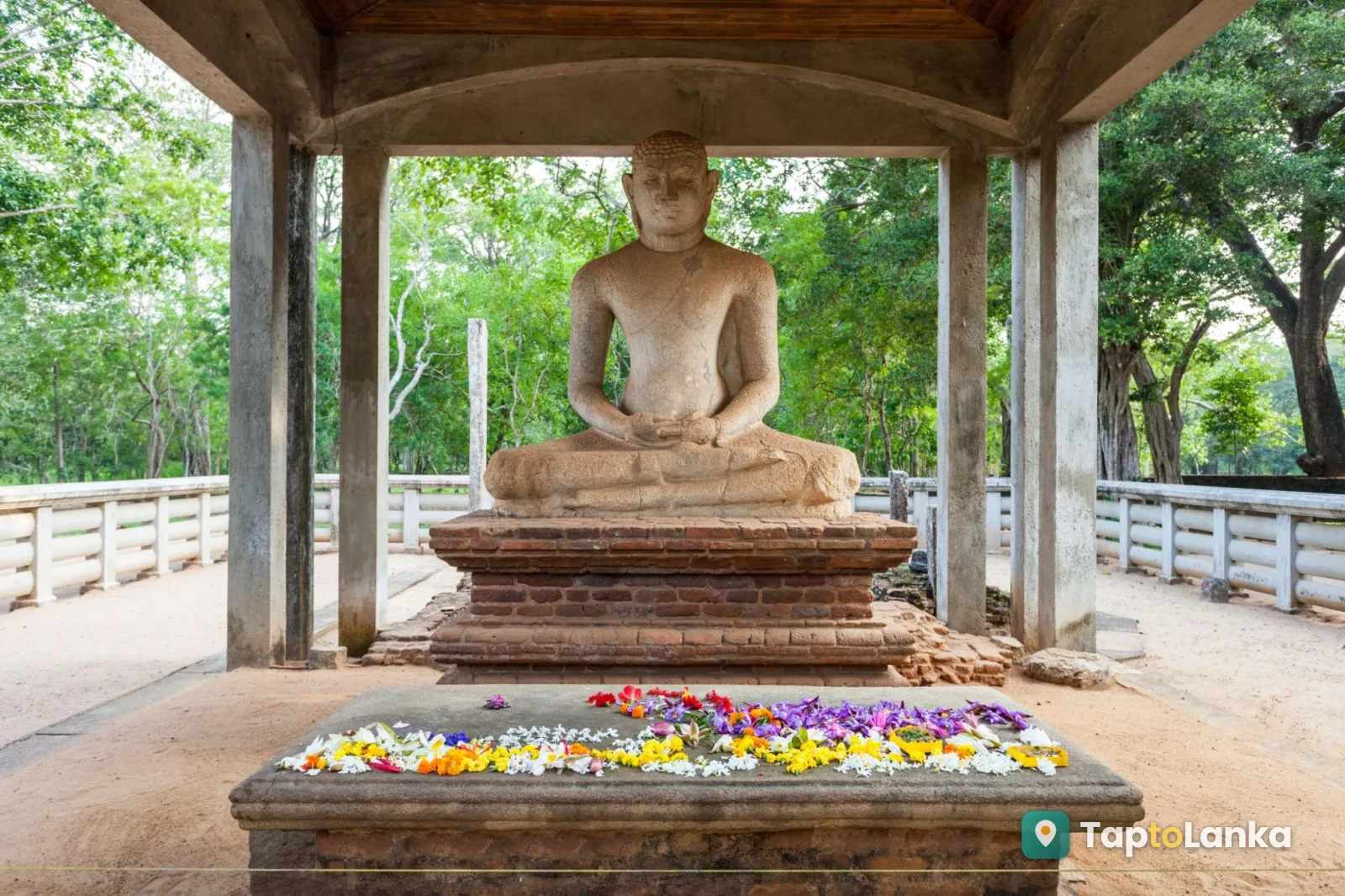
The Samadhi Buddha Statue is a remarkable ancient Buddhist sculpture located in Mahamevnawa Park, within the historic city of Anuradhapura in Sri Lanka's North Central Province. It is regarded as an outstanding masterpiece of Sri Lankan Buddhist art and is part of the cultural heritage of the ancient Anuradhapura Kingdom.
Believed to date from approximately the 4th to 6th centuries CE, the statue is carved from dolomite marble and stands approximately 2.2 metres (7 feet 3 inches) high in a seated position. It portrays Lord Buddha in the Dhyana Mudra, with both hands resting in his lap, symbolising deep meditation, spiritual concentration, and inner peace.
The statue is particularly admired for its beautifully proportioned body, carefully sculpted facial features, and serene expression. Its appearance changes subtly depending on the viewing angle and natural lighting, demonstrating the exceptional artistic skill of its ancient sculptors.
The monument is associated with the Abhayagiri monastic complex. Archaeological interpretations suggest that the sculpture may originally have been one of four Buddha statues positioned around a sacred Bodhi tree shrine.
One interesting historical connection is with Jawaharlal Nehru, India's first Prime Minister, who reportedly found inspiration and comfort in a photograph of the Samadhi Buddha Statue during his imprisonment under British colonial rule.
Today, the Samadhi Buddha Statue is an important religious and archaeological attraction. Visitors come to admire its craftsmanship, experience the peaceful surroundings, and learn about Sri Lanka's rich Buddhist heritage.
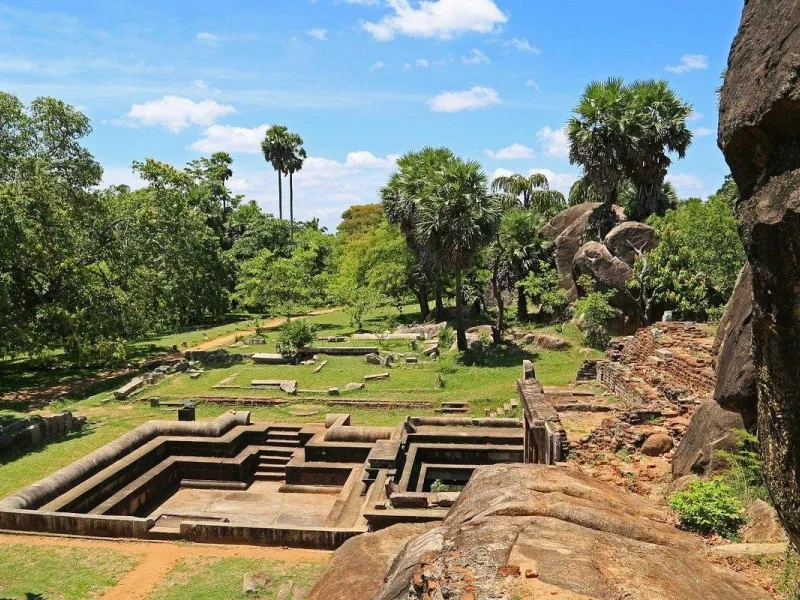
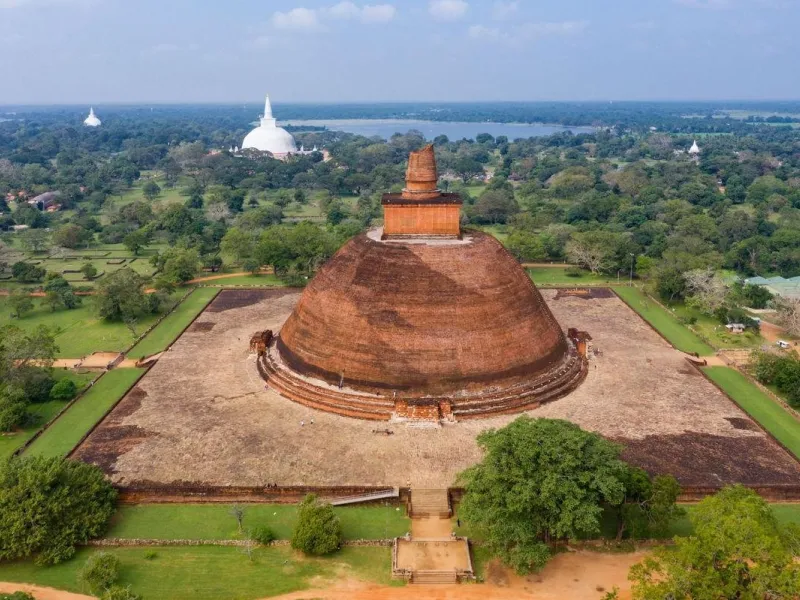
The statue is situated within the UNESCO-listed Sacred City of Anuradhapura, making it a valuable destination for pilgrims, history enthusiasts, photographers, and cultural travellers