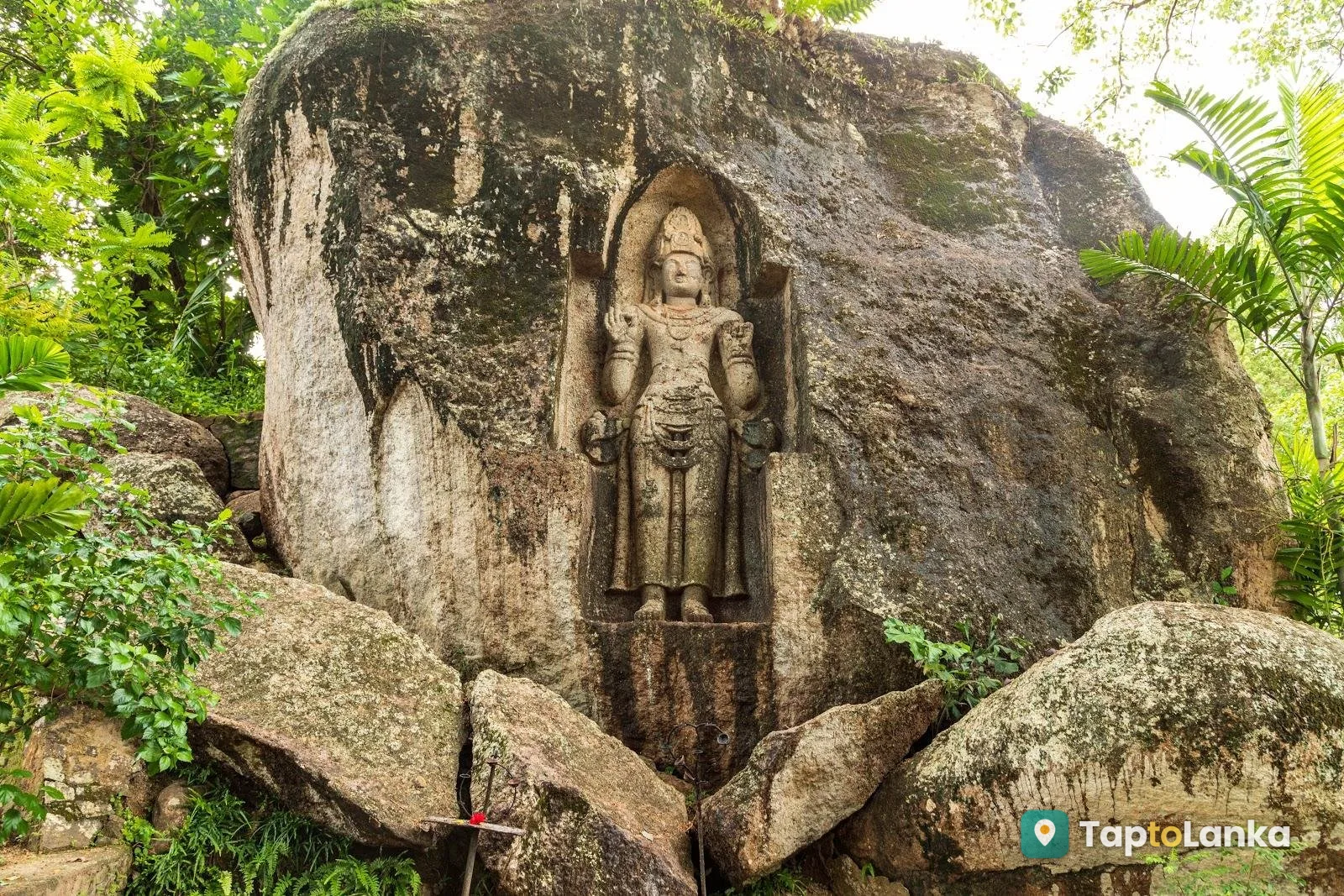
Weligama Kushtarajagala Statue, also known as Kushta Raja Gala, is a remarkable ancient Buddhist rock carving situated in Weligama in the Matara District of Sri Lanka's Southern Province. Located near Agrabodhi Raja Maha Viharaya, the sculpture is considered one of the most significant surviving examples of Mahayana Buddhist art in southern Sri Lanka.
The statue is carved directly into a large natural rock face and stands approximately 3.83 metres high. Archaeologists generally date the sculpture to the early medieval period, although estimates vary from the 6th to the 9th century CE. Its artistic features reflect the influence of Mahayana Buddhist traditions that flourished in ancient Sri Lanka.
The standing figure is widely identified as Avalokiteshvara, the Bodhisattva of Compassion, who is associated with mercy, protection, and healing in Mahayana Buddhism. The sculpture features an elaborate headdress decorated with miniature Buddha images, necklaces, bracelets, anklets, and beautifully carved traditional garments. These artistic details demonstrate the exceptional craftsmanship of ancient Sri Lankan sculptors.
The name Kushtarajagala is commonly interpreted as the Rock of the Leper King. According to a popular local legend, a king or prince suffering from a serious skin disease arrived in Weligama and was eventually cured. In gratitude, he is said to have commissioned the rock carving. This story is part of local folklore rather than a historically verified account.
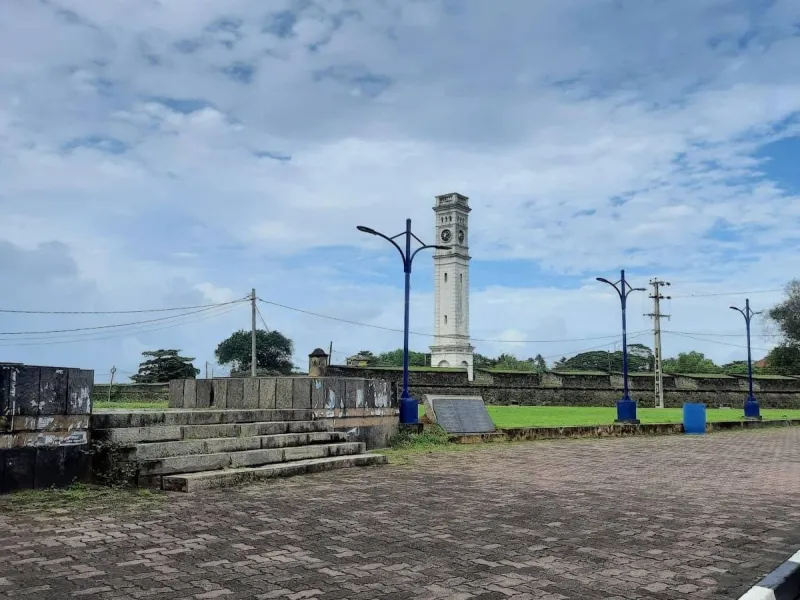
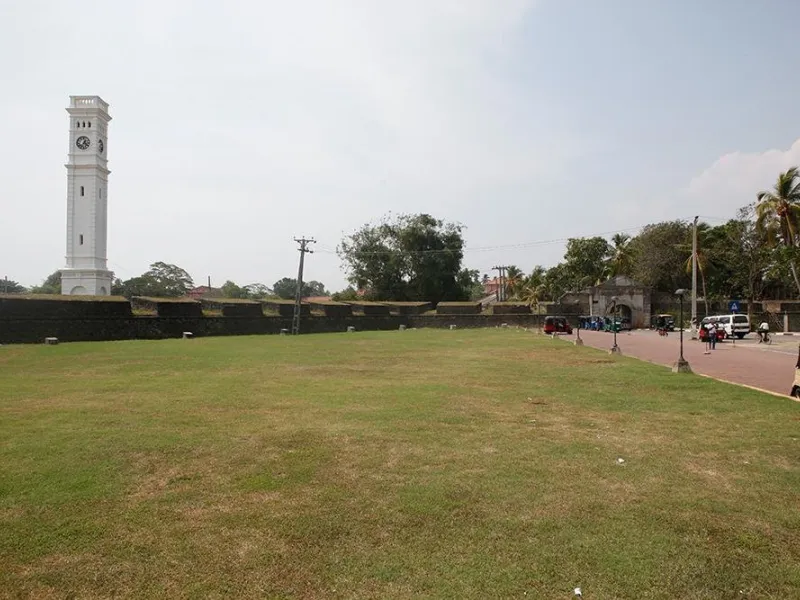
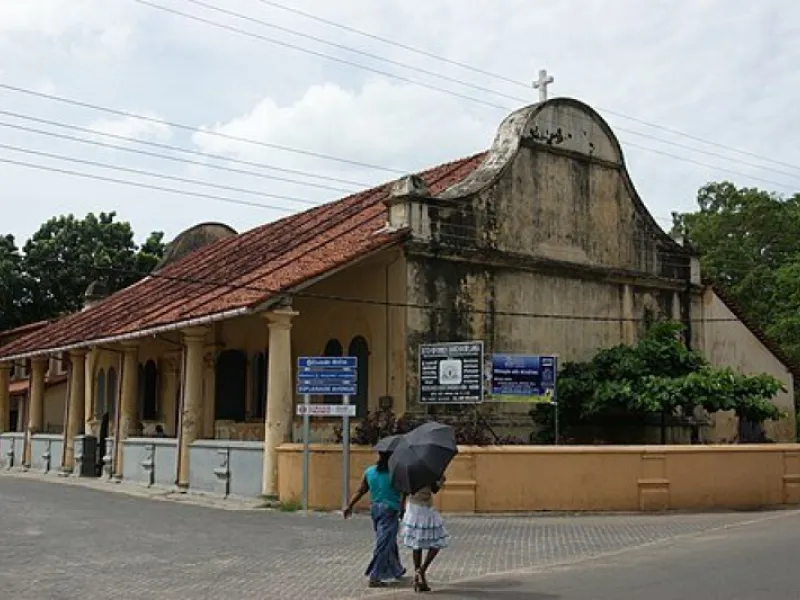
The monument is located within a small, peaceful heritage area surrounded by large rocks and tropical vegetation. The nearby Agrabodhi Raja Maha Viharaya adds religious significance to the location, while Weligama's coastal setting provides additional opportunities for sightseeing.
Kushtarajagala was officially recognised as a protected archaeological monument in Sri Lanka in 2004, highlighting its cultural and historical importance.
Today, the statue attracts visitors interested in Buddhist history, archaeological monuments, ancient stone sculpture, and local legends. It offers a fascinating glimpse into the artistic and spiritual traditions of early medieval Sri Lanka.