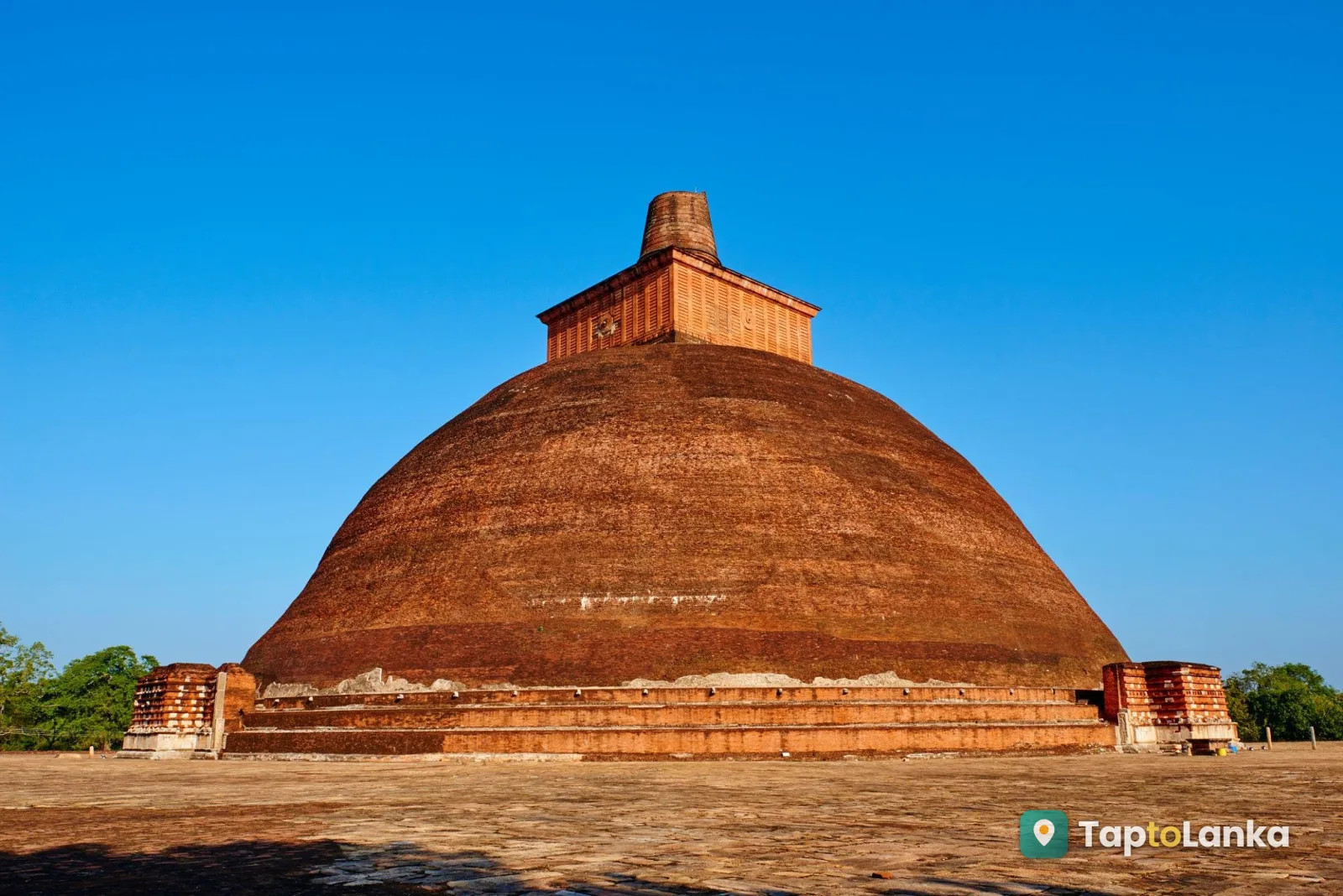
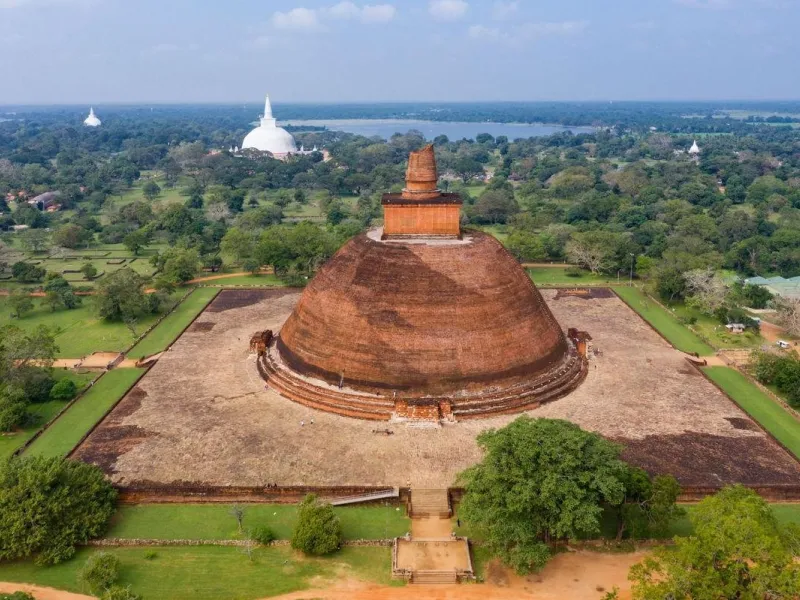
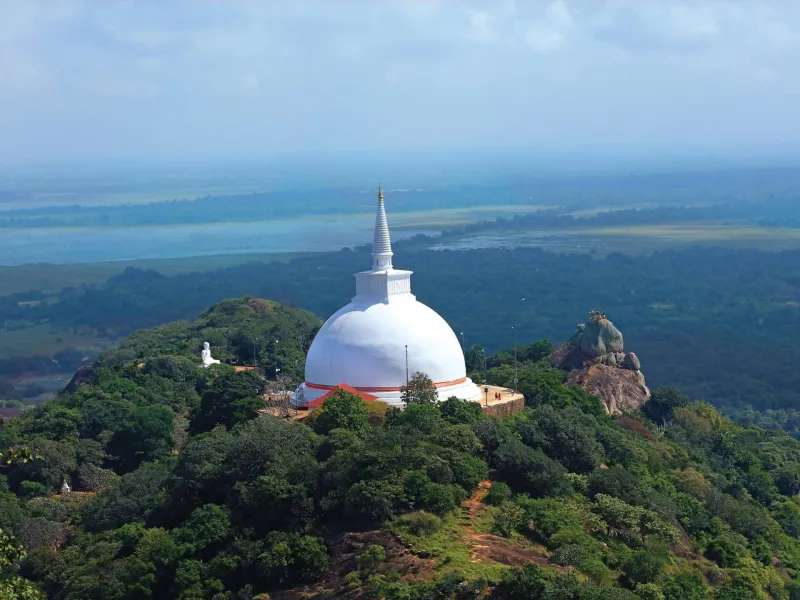
Abhayagiri Stupa, also known as Abhayagiriya Dagoba, is one of the most impressive ancient Buddhist monuments in Sri Lanka. Located in Anuradhapura in the North Central Province, the stupa stands at the heart of the historic Abhayagiri Monastery Complex, which was once a major international centre of Buddhist education and religious activity.
The Abhayagiri Monastery was founded by King Valagamba, also known as Vattagamani Abhaya, during the 1st century BCE. According to historical chronicles, the king established the monastery after regaining his throne following years of exile. The site later developed into one of the three major Buddhist monastic complexes of ancient Anuradhapura.
The enormous brick stupa is approximately 75 metres high today, although historical records indicate that it was once considerably taller. Its massive dome, square upper structure, and distinctive spire demonstrate the remarkable architectural and engineering skills of ancient Sri Lankan builders.
Abhayagiri was not only a religious centre but also a renowned institution of Buddhist scholarship. The monastery welcomed scholars and pilgrims from different parts of Asia and became associated with Theravada, Mahayana, and other Buddhist traditions. The famous Chinese Buddhist monk Faxian visited the monastery during the 5th century CE and recorded important observations about Buddhist life in ancient Sri Lanka.
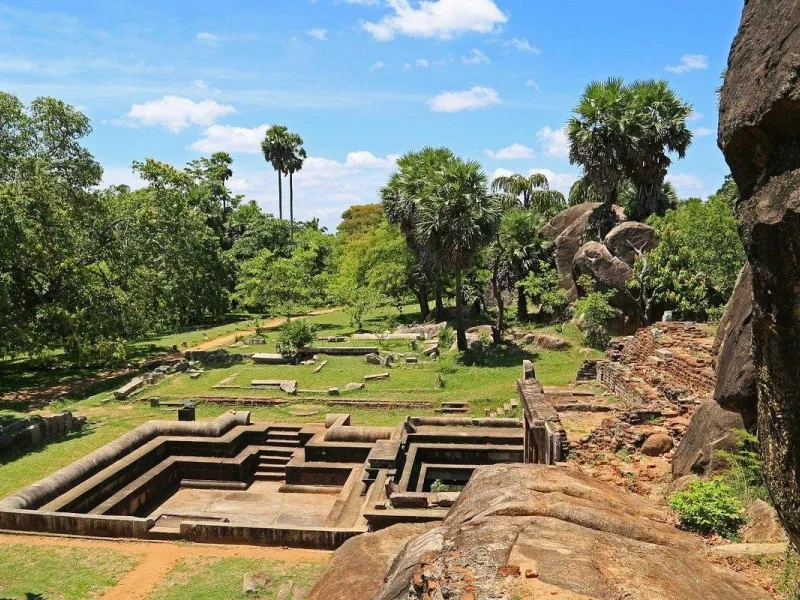
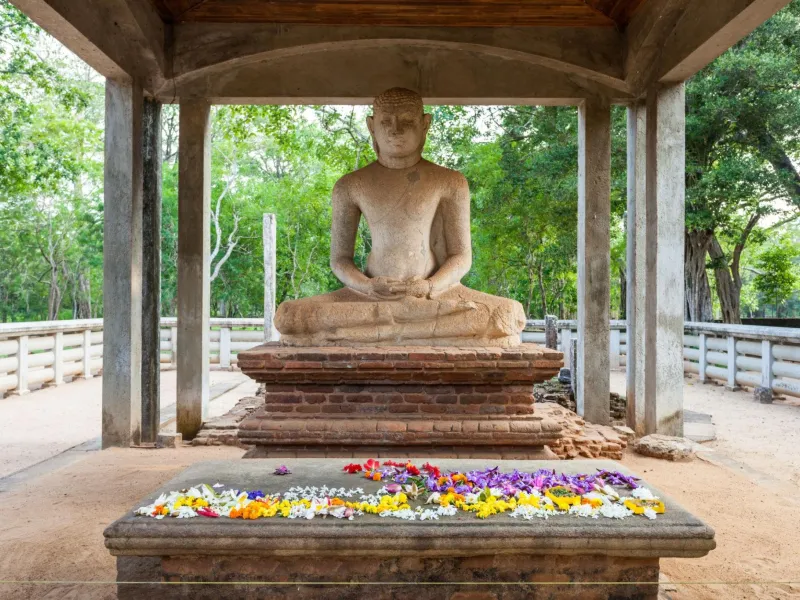
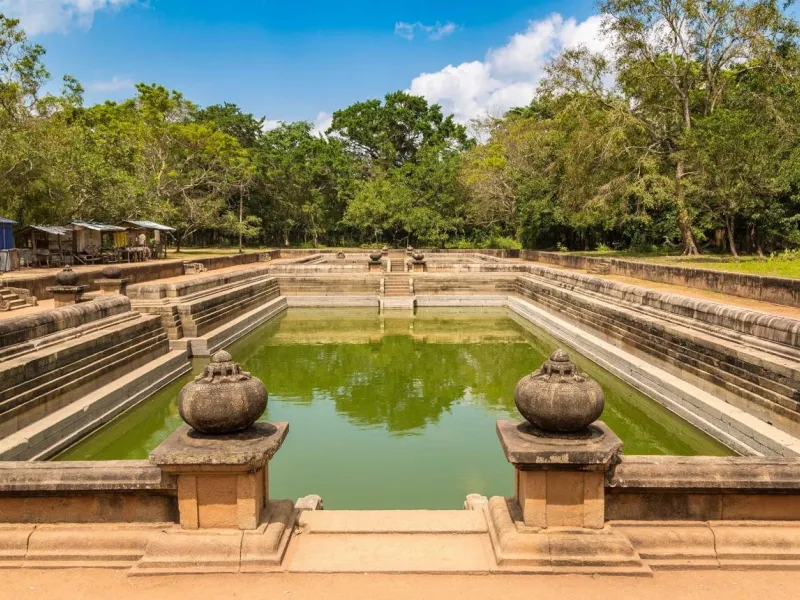
The surrounding archaeological complex contains ancient monastic buildings, stone pillars, beautifully carved moonstones, guardstones, bathing ponds, and other historic structures. Nearby attractions include the Samadhi Buddha Statue, Kuttam Pokuna (Twin Ponds), and the Abhayagiri Museum.
After centuries of deterioration, the stupa underwent extensive conservation and restoration, helping preserve its historical appearance and architectural significance.
Today, Abhayagiri Stupa is one of the sacred Atamasthana pilgrimage sites and forms part of the UNESCO-listed Sacred City of Anuradhapura. Visitors can admire its monumental architecture, explore ancient Buddhist heritage, and experience the peaceful atmosphere of this historically significant religious site.