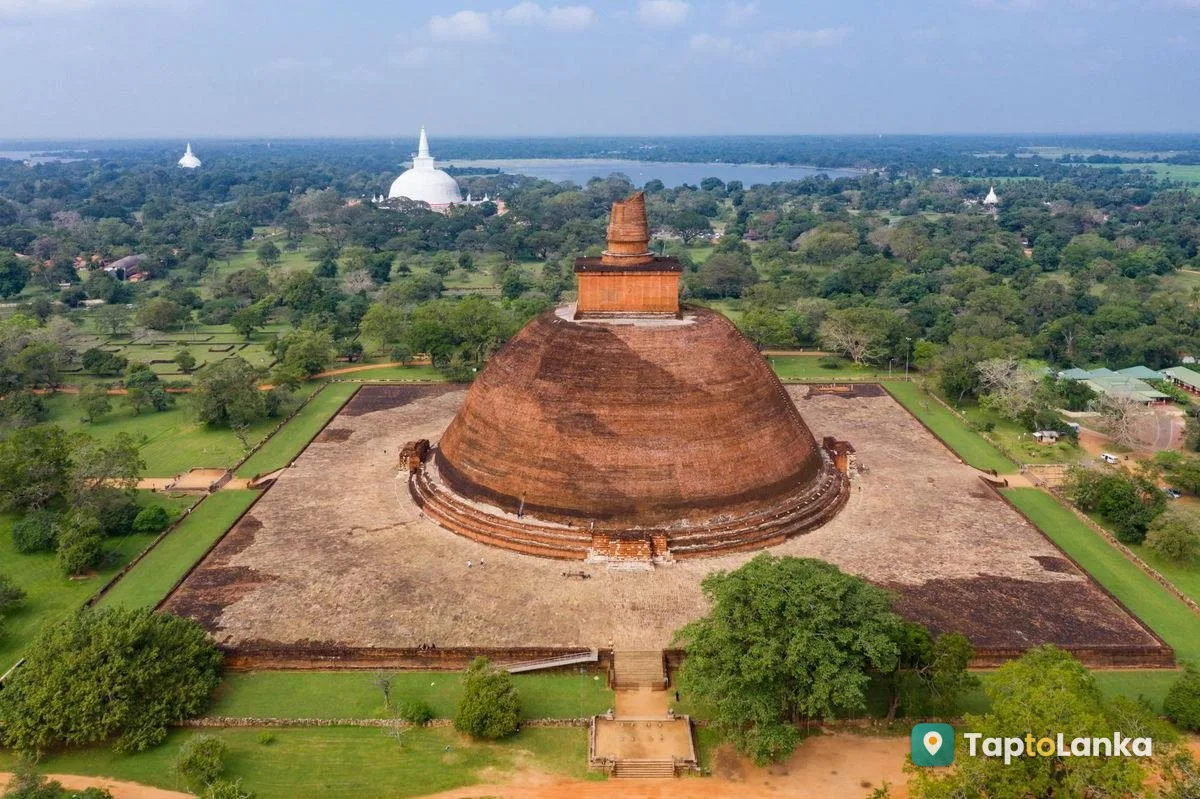
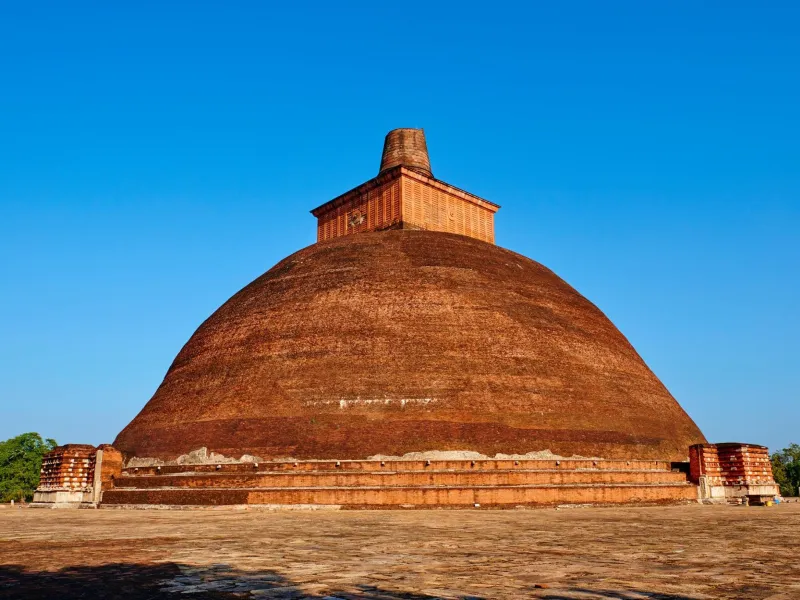
Jetavanaramaya, also known as Jethawanaramaya or Jetavana Stupa, is one of the largest and most historically significant Buddhist monuments in Sri Lanka. Situated within the ancient city of Anuradhapura in the North Central Province, it represents the exceptional architectural, religious, and engineering achievements of the ancient Anuradhapura Kingdom.
Construction of the stupa began during the reign of King Mahasena in the late 3rd century CE and was completed under his successor, King Kithsirimevan, in the early 4th century CE. Originally standing approximately 122 metres (400 feet) tall, Jetavanaramaya was among the tallest structures in the ancient world, surpassed only by the great Egyptian pyramids at the time.
The monument was constructed using an estimated 93 million baked bricks, creating an enormous dome that demonstrates the advanced building techniques of ancient Sri Lankan engineers. Today, the restored stupa stands approximately 71 metres high, and its massive reddish-brown brick structure remains one of Anuradhapura's most recognisable landmarks.
Jetavanaramaya formed the centre of the Jetavana Monastery, which developed into an important institution of Buddhist learning and religious practice. The monastery once accommodated thousands of Buddhist monks and became associated with different schools of Buddhist thought, including Mahayana Buddhism.
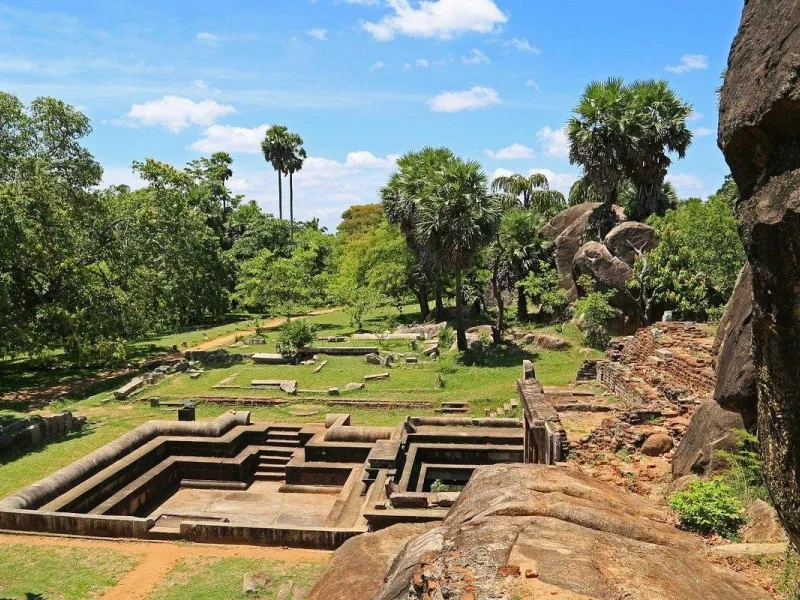
Archaeological excavations have revealed ancient monastic buildings, stone carvings, religious objects, and important historical artefacts. The nearby Jetavana Museum displays discoveries that help visitors understand the monastery's rich history.
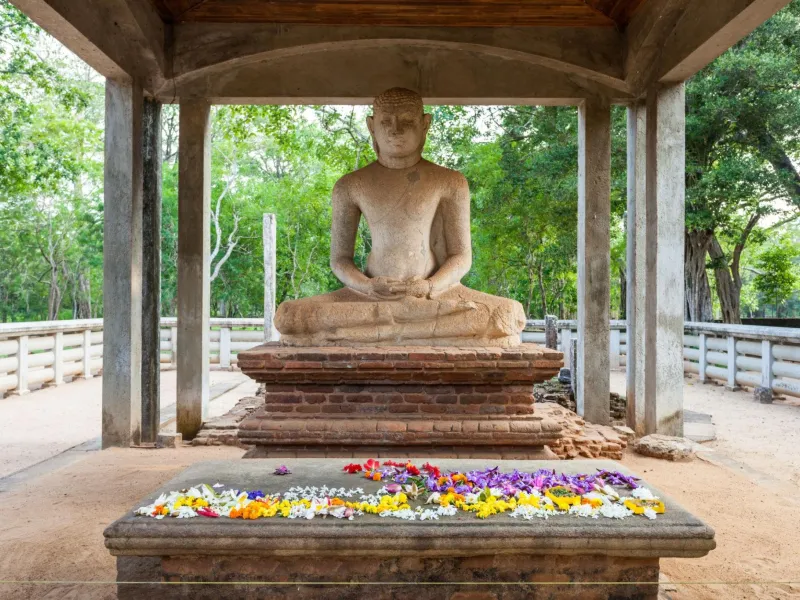
According to Buddhist tradition, the stupa is believed to enshrine a sacred relic associated with Lord Buddha. It continues to attract Buddhist devotees who visit to offer flowers, meditate, and participate in religious ceremonies.
Today, Jetavanaramaya forms part of the UNESCO-listed Sacred City of Anuradhapura. Its impressive architecture, spiritual significance, archaeological heritage, and peaceful surroundings make it an essential destination for travellers exploring Sri Lanka's ancient civilisation.