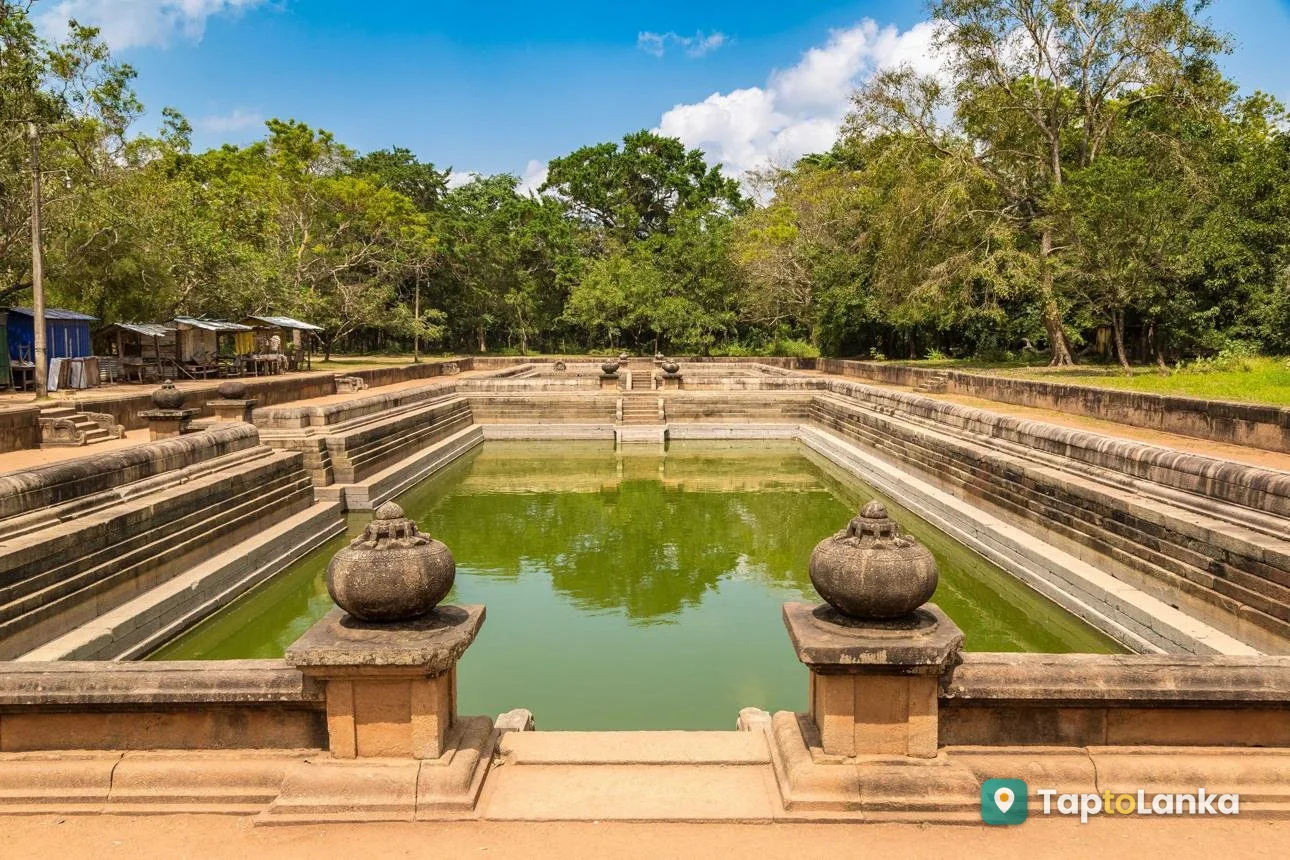
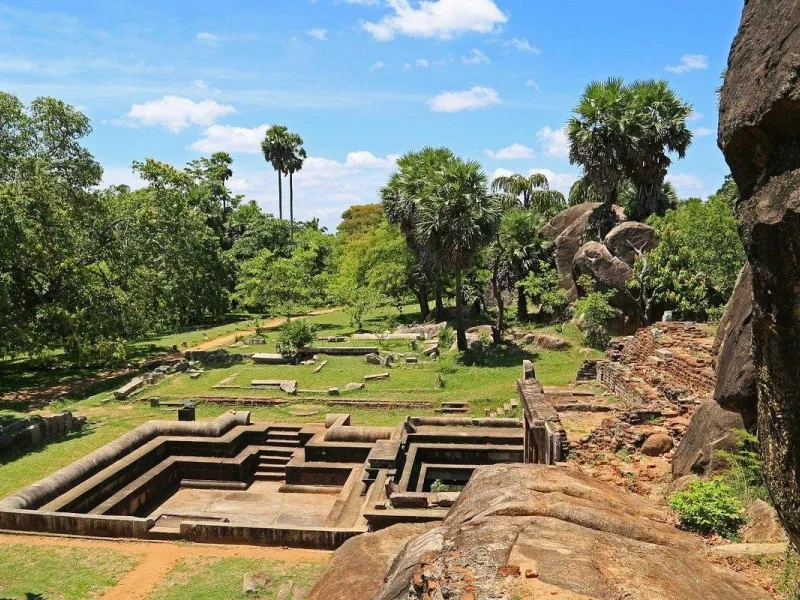
Kuttam Pokuna, meaning Twin Ponds, is one of the finest examples of ancient water-management engineering and architectural craftsmanship in Sri Lanka. Located within the historic Abhayagiri Monastery Complex in Anuradhapura, these beautifully constructed stone bathing pools demonstrate the remarkable technical knowledge of the ancient Sinhalese civilisation.
The ponds are generally associated with the 6th–7th centuries CE, although their exact construction dates remain uncertain. Some historians attribute their development to the reign of King Aggabodhi I.
The complex consists of two rectangular bathing ponds built at slightly different levels. The larger pond measures approximately 40 metres in length and 15.5 metres in width, while the smaller pond measures about 28 metres in length and 15.5 metres in width. Both feature carefully arranged stone steps, decorative walls, and elegant architectural details.
One of the most impressive features of Kuttam Pokuna is its sophisticated hydraulic system. Water was supplied through underground channels and passed through filtration structures before entering the ponds. Special drainage systems helped manage the water supply, reflecting the advanced engineering skills of ancient Sri Lankan builders.
The ponds are decorated with beautifully carved stone vessels and a famous five-headed cobra sculpture, known as a Naga, which symbolises protection and the connection between water and religious traditions.
The bathing ponds are believed to have served Buddhist monks living in the nearby Abhayagiri Monastery. Their design also contributed to the beauty and peaceful atmosphere of the monastic surroundings.
Today, Kuttam Pokuna is a protected archaeological monument and an important attraction within the UNESCO-listed Sacred City of Anuradhapura. Visitors can admire the remarkable stonework, explore the ancient monastic landscape, and learn about Sri Lanka's rich architectural and engineering heritage.